


"Roman Curse" Ancient Gingerbread Tablet Gift Basket
Ships to U.S. & Canada
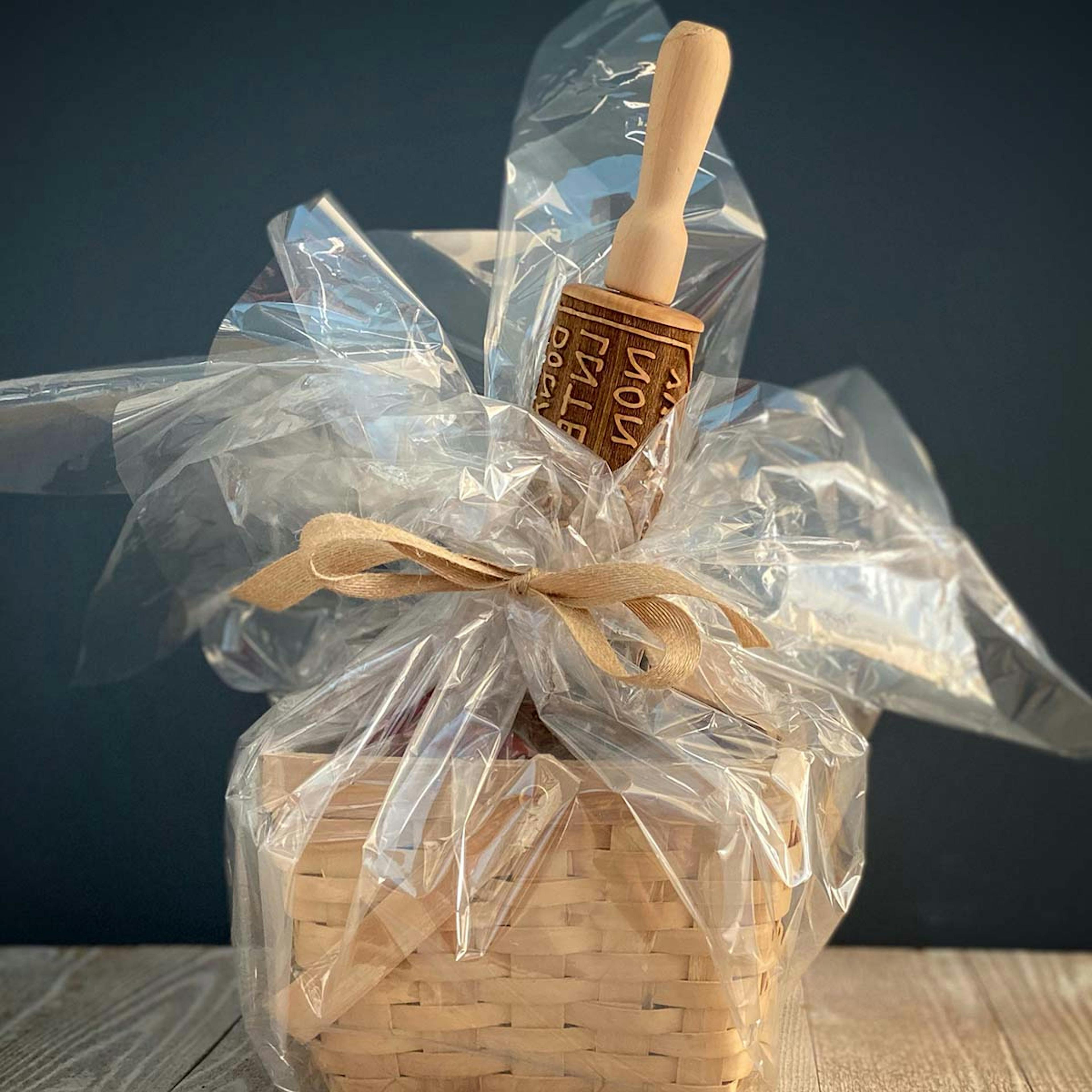
Some restrictions applyThis cuneiform rolling pin created edible archaeology at its finest! It includes a “Roman Curse” rolling pin, one linen bread bag, one package of dry gingerbread mix, a display basket, and a recipe and instructions card!
Have you ever wanted to experience the breads and pastries of Ancient Rome? Now you can! Farrell Monaco is a Roman archaeologist, baker, and writer whose research centers on food from the Roman Mediterranean. Farrell painstakingly recreates Ancient Roman recipes using techniques and ingredients sourced from archaeological research and ancient literature. Pistrinum is on a mission to revive ancient Roman cooking traditions and recreate breads and pastries enjoyed thousands of years ago in Ancient Rome. Monaco’s signature baked goods are made using (very) old-world methods, and they’re available exclusively on Goldbelly. It’s archaeo-culinary craft in action!
Basket design may vary
This package includes 1 “Roman Curse” Ancient Gingerbread Tablet Gift Basket
- Cuneiform Rolling Pin, your choice
- Each Rollling Pin measures 16” x 2.5”
- Linen Bread Bag
- 1 Package Dry Gingerbread Mix
- Basket
- Recipe Card
- Butter, Molasses, and Egg not included
- Choose to add a linen bread bag!
Rolling Pin Options Include
- Epic of Gilgamesh, Tablet 1
- Epic of Gilgamesh, Tablet 5
- Roman Curse Tablet
Bread Bag Colors Include
- Natural
- Red
- Blue
- Teal
- Kit arrives without coolant, ready to bake
- Gingerbread will last 4 days at room temperature or frozen for up to 3 months in a sealed bag
- Wash rolling pin only by hand. Do not soak or place pin in the dishwasher.
To Serve
Tools
- Parchment paper
- A sharp knife
- Cuneiform or Curse Tablet Rolling Pin
Ingredients (Not Included)
- Butter (3/4 Cup)
- Molasses (2/3 Cup)
- 1 Egg
Make the Gingerbread
- Begin the gingerbread preparation process the night before you intend to bake as the dough must be chilled for several hours before handling and baking.
- Cut the butter into small portions.
- Put all of the dry ingredients together in a mixer or mixing bowl and blend with the butter and liquid ingredients thoroughly until everything has been creamed nicely together.
- Cover with plastic wrap and chill the dough overnight.
- When you’re ready to prepare the gingerbread tablets remove the gingerbread from the fridge and place it onto the parchment paper. You’ll notice that the dough is beginning to cooperate when it warms up and you can roll it easily.
- Flatten the gingerbread into a slab that will fit will onto your baking sheet. Aim to achieve a thickness of about 1/4" for your slab.
- Refrigerate the gingerbread slabs again for 30 minutes so the dough will firm up again enough to hold the impressions from the rolling pin without the dough sticking to the pin.
- Start from the top of the slab and place the seam of the pin’s design face in line with the top of the slab.
- Roll the pin downwards, towards yourself.
- The pin should make two rotations creating two separate tablets on the large slab of gingerbread.
- Using a sharp knife, slice a line between the two tablets and then cut the parchment paper beneath the tablets with scissors. Trim the ragged edges of the tablets with a sharp knife or leave them ragged for effect!
- Place the two tablets on one baking sheet together or two separate sheets.
- Preheat the oven to 350F.
- Chill your tablets one more time while the oven is preheating.
- Once the oven is heated, bake the slab for 15-20 minutes and watch for browning of the edges.
- Once the top is uniformly baked and the edges start to brown, take the tablets out of the oven and let them cool for a few hours.
- Gingerbread Mix – Wheat Flour, Brown Sugar, Baking Soda, Ginger, Cinnamon, Nutmeg, Chili Flakes, Salt, Cinnamon. Alergens: Wheat (Gluten).

Breads & Pastries Inspired by Ancient Roman Recipes
Breads & Pastries Inspired by Ancient Roman Recipes

Have you ever wanted to experience the foods of Ancient Rome? Now you can! Farrell Monaco is a Roman archaeologist, baker, and writer whose research centers on food from the Roman Mediterranean. Farrell is renowned for her experimental archaeology projects, and she recreates Ancient Roman recipes using techniques and ingredients sourced from archeological research in addition to ancient texts and art. In 2021, she launched her online bakery, Pistrinum, on a mission to revive ancient Roman cooking traditions and recreate breads and pastries enjoyed thousands of years ago in Ancient Rome. It’s archaeo-culinary craft in action!
Monaco’s signature baked goods are made using (very) old-world methods, and they’re available exclusively on Goldbelly. Her creations include Panis Quadratus loaves found in excavated ovens in Pompeii, Roman Rosettes made with savory spices praised by Pliny the Elder, crunchy-crusted bread rings (Ciambelle) milled with chickpeas, Roman fry-breads written about in Virgil’s “Aeneid,” and sweet fried honey fritters called Globi from the writings of Cato the Elder. Order these for delivery direct to your villa, and eat like an Ancient Roman!